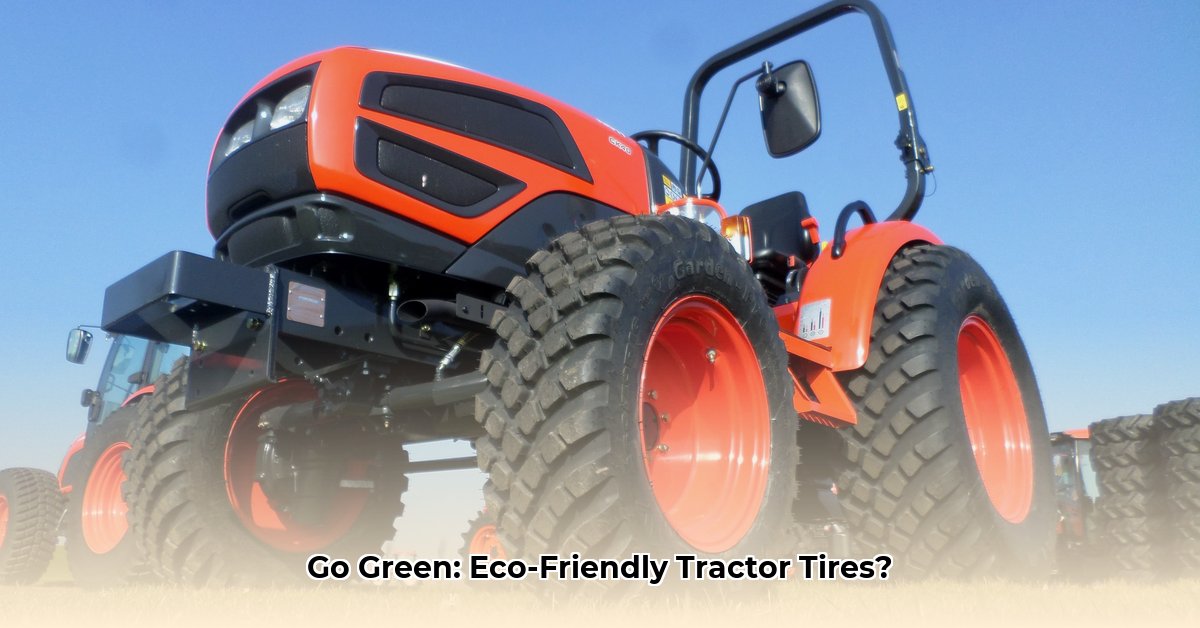
Choosing the right tires for your small tractor is crucial for both operational efficiency and environmental sustainability. This guide will help you select tires that balance performance with eco-consciousness, minimizing your farm's environmental footprint. We'll explore tire types, sustainability considerations, and provide a practical buying guide to help you make informed decisions. Don't overlook the importance of tire longevity; how can farmers maximize tire lifespan to reduce waste? This question is central to responsible farming. For more information on specific tire sizes, check out our guide on 20-inch tractor tires.
Understanding Small Tractor Tires: Beyond the Rubber
Small tractor tires are more than just rubber; they're a critical interface between your machine and the soil. The type of tire significantly impacts fuel efficiency, traction, and soil compaction. Two main types exist: radial and bias-ply. Radial tires (with layers arranged radially) generally offer better fuel efficiency and a smoother ride, while bias-ply tires (with layers arranged diagonally) are often more durable. Tire construction and material composition are also vital. Natural rubber, sourced from rubber trees, is a more sustainable option than synthetic rubber, whose production is energy-intensive and relies on fossil fuels. But how does the choice between natural and synthetic rubber impact the overall environmental cost? Let's delve deeper.
Sustainability Considerations: The Lifecycle of a Tractor Tire
The environmental impact of small tractor tires extends far beyond their use on the farm. Let's examine the entire lifecycle:
1. Material Sourcing
Natural rubber production, while renewable, can involve deforestation and the use of harmful pesticides if not managed sustainably. Synthetic rubber, a petroleum-based product, contributes to greenhouse gas emissions during its manufacturing. Dr. Anya Sharma, Agricultural Sustainability Expert at the University of California, Berkeley, emphasizes, "Sustainable sourcing of rubber, whether natural or synthetic, is paramount. We need to shift towards more responsible plantation management and explore bio-based alternatives." This highlights the need for informed consumer choices.
2. Manufacturing Processes
Tire manufacturing is energy-intensive and generates pollutants. Significant energy is needed for mixing, molding, and curing the rubber, often derived from fossil fuels. Reducing this energy consumption and transitioning to renewable energy sources is vital for minimizing the environmental footprint.
3. Transportation
Transporting tires from manufacturing facilities to farms contributes to greenhouse gas emissions. Opting for local suppliers reduces the transportation distance and associated environmental impact.
4. End-of-Life Management
Many used tires end up in landfills, posing environmental challenges. Recycling options are improving, but many tires still go unrecycled, illustrating the importance of manufacturer programs and the need to choose tires from companies prioritizing recycling initiatives.
5. Durability and Longevity
A key aspect of sustainable tire selection is durability. Longer-lasting tires reduce the need for frequent replacements, minimizing waste and resource consumption. Therefore, choosing high-quality, durable tires significantly reduces the overall environmental cost.
A Smart Buying Guide: Choosing Sustainable Small Tractor Tires
Making environmentally conscious choices requires careful consideration of several factors:
Durability and Longevity: Prioritize long-lasting tires with robust construction. A longer lifespan translates to cost savings and less waste. Look for warranties as an indication of manufacturer confidence in their product's durability.
Material Composition: Opt for tires with recycled content or those made from sustainably sourced natural rubber. Increased transparency from manufacturers regarding their sourcing is essential for informed decision-making.
Price vs. Total Cost of Ownership: Consider the total cost over the tire’s lifespan, not just the upfront price. A more expensive, durable tire might cost less in the long run due to reduced replacements.
Recycling Options: Select manufacturers with established tire recycling programs. This demonstrates a commitment to responsible environmental practices.
Source Locally When Possible: Purchasing from local suppliers supports local businesses and reduces transportation-related emissions.
Extending Tire Life: Practical Tips for Maximizing Lifespan
Proper tire maintenance significantly extends their life and reduces environmental impact.
Maintain Proper Inflation: Consistent, correct inflation is crucial. Underinflation increases wear and fuel consumption; overinflation can damage the tire.
Regular Inspections: Regularly check for cuts, punctures, and other damage. Addressing small issues promptly prevents larger problems down the line.
Avoid Aggressive Driving: Avoid sudden acceleration, braking, and turning as these put extra stress on the tires. Smooth operation minimizes wear and tear.
Rotate Tires Regularly: Regular rotation ensures even wear across all tires, extending their overall life.
Conclusion: Sustainable Farming Starts with Sustainable Choices
Choosing eco-friendly small tractor tires is a significant step towards sustainable farming. By prioritizing durability, sustainable materials, and responsible end-of-life management, you can reduce your farm's environmental footprint. Demand transparency from manufacturers, support companies with robust recycling programs, and actively work to extend the life of your tires. Every choice you make contributes to a more sustainable and environmentally conscious agricultural future.